How Long Does Collision Repair Really Take, And What Actually Causes Delays?

After an accident, one of the first questions drivers ask is, How long will my collision repair take? The answer is often more complicated than expected. Some repairs take only a few days, while others may take several weeks. The timeline depends on the severity of the damage, parts availability, insurance approvals, and the complexity of the repair process. Many vehicle owners expect repairs to be completed quickly, but unexpected delays are common. Understanding how collision repair works can help reduce frustration and set realistic expectations. Whether you need minor cosmetic work or extensive auto body collision repair, knowing what affects repair timelines can make the process much less stressful.

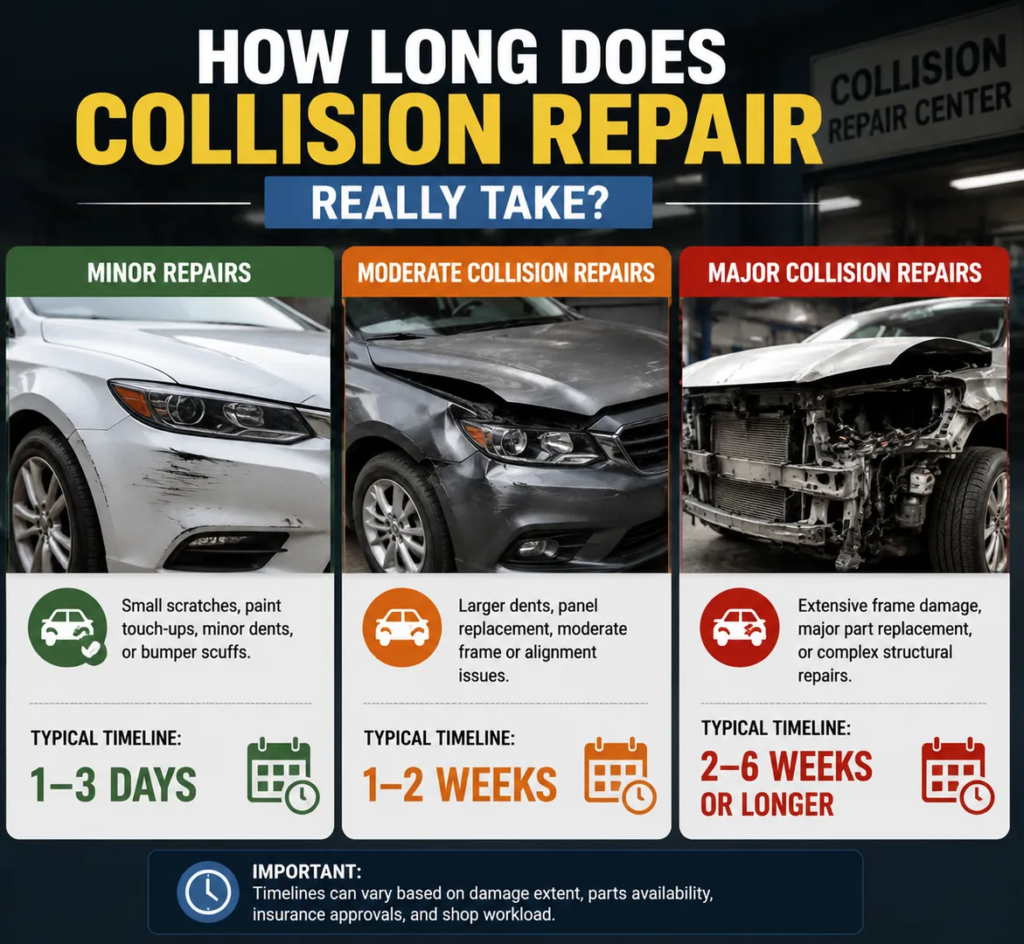
How Long Does Collision Repair Really Take?

Average Collision Repair Timelines

Minor Repairs

  • Paint scratches
  • Small dents
  • Bumper repairs

Typical timeline: 1–3 days

Moderate Collision Repairs

  • Multiple panel repairs
  • Minor structural corrections

Typical timeline: 1–2 weeks

Major Collision Repairs

  • Frame straightening
  • Extensive panel replacement
  • Safety system recalibration

Typical timeline: 2–6 weeks or longer

Why Is Every Vehicle Different?

Two vehicles with similar-looking damage may have very different repair timelines. Factors include the vehicle make and model, the extent of the damage, parts availability, and the complexity of the repair procedures.

What Actually Causes Collision Repair Delays?

Hidden Damage Discovered During Repairs

One of the most common causes of delays is hidden collision damage. What appears to be a simple bumper repair may reveal bent brackets, damaged sensors, or frame issues once the vehicle is disassembled. For example, a vehicle involved in a low-speed rear-end collision may have only visible bumper damage. After teardown, technicians may discover hidden frame distortion that requires additional repair time.

Parts Availability Issues

Modern vehicles often require specific OEM parts. Delays can occur due to:

  • Backordered components
  • Manufacturer shortages
  • Special-order parts for luxury or imported vehicles

Insurance Approval Delays

Many repairs require insurance authorization. Additional delays can occur when:

  • Supplemental repairs are discovered
  • Additional documentation is requested
  • Communication between the repair shop and insurer takes time

Advanced Safety System Recalibration

Today’s vehicles often include cameras, radar sensors, lane-keeping systems, and automatic braking technology. After repairs, these systems must be professionally calibrated to ensure proper operation.

Severe Structural Damage

Major frame damage requires precise measurements, specialized equipment, and additional quality-control inspections, all of which add time to the repair process.

Common Delay Factors

  • Hidden damage
  • Parts shortages
  • Insurance approvals
  • Safety system calibration
  • High repair shop workload

Warning Signs Your Repair May Take Longer Than Expected

  • Significant structural damage
  • Airbag deployment
  • Multiple damaged panels
  • Electric or hybrid vehicle repairs
  • Luxury vehicle components

The Collision Repair Process Explained

  • Initial Vehicle Inspection: Technicians assess visible damage and create a preliminary estimate.
  • Insurance Review and Approval: The insurance company reviews the estimate and authorizes repairs.
  • Vehicle Disassembly and Hidden Damage Inspection: A thorough hidden damage inspection helps identify problems that were not visible during the initial assessment.
  • Structural and Body Repairs: This stage may include frame repair, panel replacement, and dent removal.
  • Paint and Refinishing: Technicians match the vehicle’s colour, prepare surfaces, and apply paint.
  • Reassembly and Calibration: Repaired components are reinstalled, and electronic safety systems are calibrated.
  • Final Quality Inspection: The vehicle undergoes road testing, safety verification, and a final inspection before delivery.

How Professional Collision Centers Minimize Delays

Advanced Damage Assessment Technology

Modern collision repair centers use digital measuring systems and advanced repair technology to identify damage accurately and plan repairs efficiently.

Strong Supplier Relationships

Established repair facilities often have better access to parts and faster sourcing channels.

Experienced Repair Technicians

Skilled technicians can diagnose problems quickly, reduce rework, and streamline the repair process.

Proactive Customer Communication

Regular updates help customers understand progress and avoid surprises.

Benefits of Choosing an Experienced Collision Center

  • Faster repairs
  • Better communication
  • More accurate estimates
  • Higher-quality workmanship
  • Better overall customer experience

What You Can Do to Help Speed Up Collision Repairs

  • Report the accident quickly: Start the insurance process as soon as possible.
  • Submit insurance documents promptly: Delays in paperwork can delay repairs.
  • Choose a reputable collision repair shop: Experienced facilities often complete repairs more efficiently.
  • Respond quickly to repair updates: Fast decisions help keep the process moving.
  • Understand realistic expectations: Quality repairs require time.

Expert Tips

  • Don’t delay vehicle inspections.
  • Choose certified repair facilities.
  • Ask about parts availability upfront.
  • Request regular progress updates

Why Professional Collision Repair Matters

  • Restores vehicle safety
  • Protects vehicle value
  • Prevents long-term mechanical problems
  • Ensures proper safety system functionality

Why Drivers Trust Dream Collision Center

Comprehensive Collision Repair Services

Dream Collision Center provides a full range of collision repair services, including auto body repair, frame straightening, paint refinishing, and dent removal.

Advanced Repair Technology

We use digital diagnostics, OEM repair procedures, and precision measuring systems to ensure accurate repairs.

Transparent Communication

Customers receive insurance assistance, repair updates, and realistic timelines throughout the process.

Commitment to Quality Workmanship

Our experienced technicians perform thorough inspections and focus on delivering safe, reliable repairs.

Conclusion

Collision repair timelines vary based on damage severity, parts availability, insurance approvals, and repair complexity. Understanding these factors helps drivers set realistic expectations. Rushed repairs can lead to recurring problems, while proper repairs restore safety, performance, and vehicle value. If you need professional collision repair Los Angeles services, Dream Collision Center offers expert repairs, transparent communication, and a commitment to getting you safely back on the road. Contact Dream Collision Center today for a professional inspection, accurate repair estimate, and expert auto collision repair services.

Frequently Asked Questions

Q1: How long does collision repair usually take?

  • Minor repairs may take a few days, while major repairs can take several weeks, depending on the damage and parts availability.

Q2: Why do collision repairs sometimes take longer than expected?

  • Hidden damage, parts shortages, insurance approvals, and safety system calibration are common causes of delays.

Q3: Can hidden damage delay repairs?

  • Yes. Many vehicles have damage beneath the surface that is discovered only after disassembly.

Q4: How do insurance approvals affect repair timelines?

  • Additional approvals and documentation can delay the repair process.

Q5: Do OEM parts take longer to obtain?

  • In some cases, yes. Backorders and manufacturer shortages can extend repair timelines.

Q6: How can I speed up the collision repair process?

  • Report the accident quickly, submit paperwork promptly, and choose an experienced repair facility.

Q7: Is it safe to drive a vehicle before repairs are completed?

  • That depends on the extent of the damage. A professional inspection is recommended before continuing to drive the vehicle.

Q8: How do I choose a reliable collision repair shop?

  • Look for certified technicians, positive reviews, modern equipment, and clear communication throughout the repair process.

Share This Post

More To Explore

Been in an accident?