
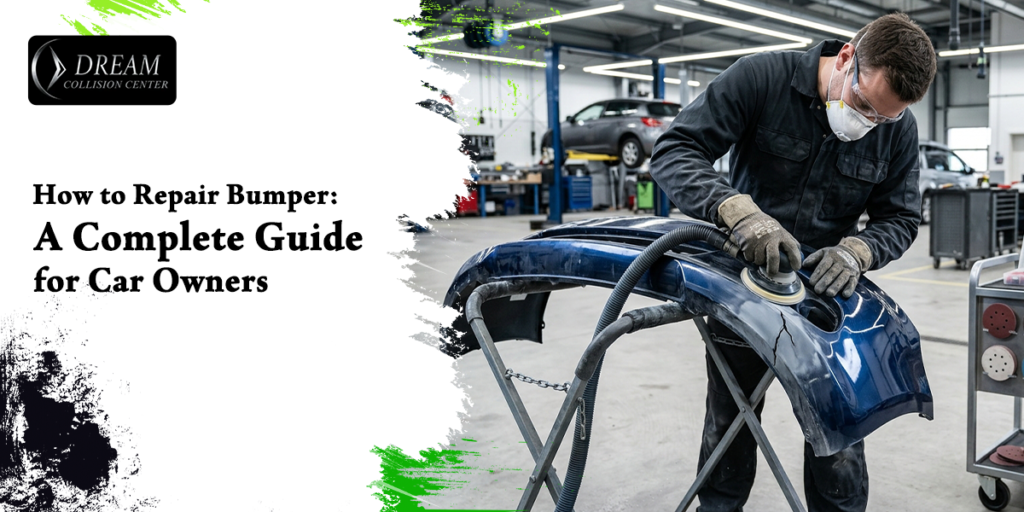
A bumper is liable to get scuffed, dented, chipped, or cracked during a minor scrape in the park, a car park bump, or a bump with a curb. Some damage may be cosmetic, but in certain cases it can affect the mounting points of the bumper and what lies behind it. Become familiar with bumper repair before it gets worse.
No matter if you have a scratch on your car bumper, bumper damage, or even a broken bumper, there is a possibility of a bumper repair. Find out what kind of repair you need and whether it is DIY or requires a professional.
Bumper repair is the process of restoring a damaged bumper so it looks and functions properly again. Depending on the condition, this may include repairing scratches, reshaping dents, fixing cracks, replacing clips, or refinishing the surface.
The repair process should address more than appearance. A properly repaired bumper should be securely attached and aligned with the vehicle.
A bumper is designed to help manage the effects of certain impacts. It can absorb or distribute some of the force from a collision and help protect parts located behind it.
Modern vehicles can also have parking sensors, cameras, and other technology around the bumper area. Because of this, damage that appears minor may still require a detailed inspection.
A damaged bumper should not automatically be treated as a cosmetic problem. Proper assessment matters, especially after a collision.
Different types of damage require different bumper repair methods. Here are some of the most common problems car owners encounter.
Light scratches and scuffs are among the most common bumper problems. They can happen when another vehicle makes contact with your car or when the bumper rubs against a wall or parking barrier.
Minor surface damage may be repaired through cleaning, sanding, priming, and repainting. Deeper scratches may require additional preparation before the final paint is applied.
Plastic bumper covers can develop dents after an impact. Depending on the material and severity, a technician may carefully reshape the damaged area.
Trying to fix bumper dents with excessive heat or force can make the damage worse. Professional technicians have the tools and experience to determine whether reshaping is appropriate.
Cracks are more serious than surface scratches. A small crack may sometimes be repaired, but larger splits or damaged mounting areas may require replacement.
If you are fixing bumper damage, do not focus only on the visible crack. The technician should also check the surrounding structure and mounting points.
Related Guide
While every repair is different, professional bumper repair work generally follows several important stages. If you want a more detailed breakdown of the repair process, read our guide on
How to Repair a Car Bumper: Step-by-Step Guide to Bumper Damage.
The first step is a careful inspection. The technician checks the visible damage and looks for broken clips, brackets, mounting points, or other affected components.
In some cases, the bumper cover needs to be removed to inspect the area behind it. This helps reveal damage that may not be visible from the outside.
The repair method depends on the material and condition of the bumper. Minor plastic damage may be repaired using appropriate plastic repair techniques.
More extensive damage may require replacement. If the bumper can be repaired, the damaged area may be reshaped, reinforced, sanded, and prepared for refinishing.
After the physical repair is complete, the surface needs to be prepared for paint. This can include sanding, priming, and color matching.
The final finish should blend naturally with the surrounding body panels. The bumper repair should also be reinstalled securely with proper alignment.
One of the most important decisions is whether to repair the existing bumper or replace it. There is no single answer because several factors need to be considered.
Repair may make sense when the damage is limited, and the bumper still has good structural integrity. Replacement may be more appropriate when the bumper is severely cracked, badly deformed, or missing significant sections.
A professional inspection can help you understand which option is more practical.
Look at the scale of the damage. Small imperfections and dents may be able to be repaired, while large cracks, mount point failure, or significant deformation may necessitate a replacement bumper.
The site of the damage also affects the repair; damage near the brackets, sensors, or other parts may need further examination.
Repairing bumper is often less expensive than replacing it, but cost should not be the only consideration. A cheap repair that does not restore proper fit or function can lead to additional expenses later.
A professional estimate can help you compare the repair and replacement options before making a decision.
The age of the vehicle and type of bumper can also affect the repair decision. Older vehicles may have different materials and parts availability compared with newer models.
Modern bumpers can include sensors and other technology, making proper repair and installation especially important.
Taking care of your bumper can help reduce cosmetic damage and make problems easier to spot.
Wash your bumper regularly and check it for scratches, cracks, loose sections, or unusual gaps. Early inspection can help you address small problems before they become more serious.
If you notice new damage after hitting something, have it checked rather than assuming it is only cosmetic.
Use cleaning products designed for automotive surfaces. Avoid harsh chemicals or abrasive materials that can damage the bumper’s finish.
Keeping the surface clean also makes scratches and paint damage easier to identify.
Many bumper damages happen in parking areas. Take extra care around curbs, concrete barriers, poles, and other vehicles.
If possible, choose parking spaces that provide enough room to maneuver. A few extra seconds of care can prevent an expensive repair.
When the damage extends past a cosmetic scratch, going professional is generally the better option. Skilled technicians will be able to quickly assess the hidden damage and whether replacing the bumper or simply repairing bumper damage is the better option.
A professional bumper repair shop also has the ability to perform paint matching, proper installation, and inspection of the related items.
When choosing a repair shop, look for experienced technicians, clear estimates, quality repair procedures, and good communication throughout the process.
Bumper damage can vary from surface scratches to major cracks and mounting point breaks. Learning how to differentiate between various bumper damage types will guide you toward the proper course of action.
If you need to repair car bumper damage, start with a proper inspection. Avoid rushing into a DIY solution when the damage may involve hidden components or safety-related systems.
With timely attention and the right repair approach, you can restore your vehicle’s appearance and help keep the bumper properly fitted and functional.
If your vehicle has bumper damage after an accident, Dream Collision Center can help assess the damage and determine the appropriate repair solution. The facility provides collision and auto body repair services for different makes and models, with services that can include structural repair, paint and color matching, and other collision-related work.
For more information about available services or to request an estimate, visit
Dream Collision Center.
It depends on the damage. Can be repaired: small scratches and scuffs, dents, moderate cracks, deformation, and some broken mounting points. Needs to be replaced: severe cracking, deformation, or broken mounting points.
A vehicle normally has a bumper at the front and rear. The visible painted or plastic section is often called the bumper cover, while additional components sit behind it.
It depends on the damage. Can be repaired: small scratches and scuffs, dents, moderate cracks, deformation, and some broken mounting points. Need to be replaced: severe cracking, deformation, or broken mounting points.
The bumper repair is the visible outer panel that you see on the front or rear of the vehicle. Behind it are components that can include reinforcement and energy-absorbing materials. Damage to either area should be inspected after an impact.