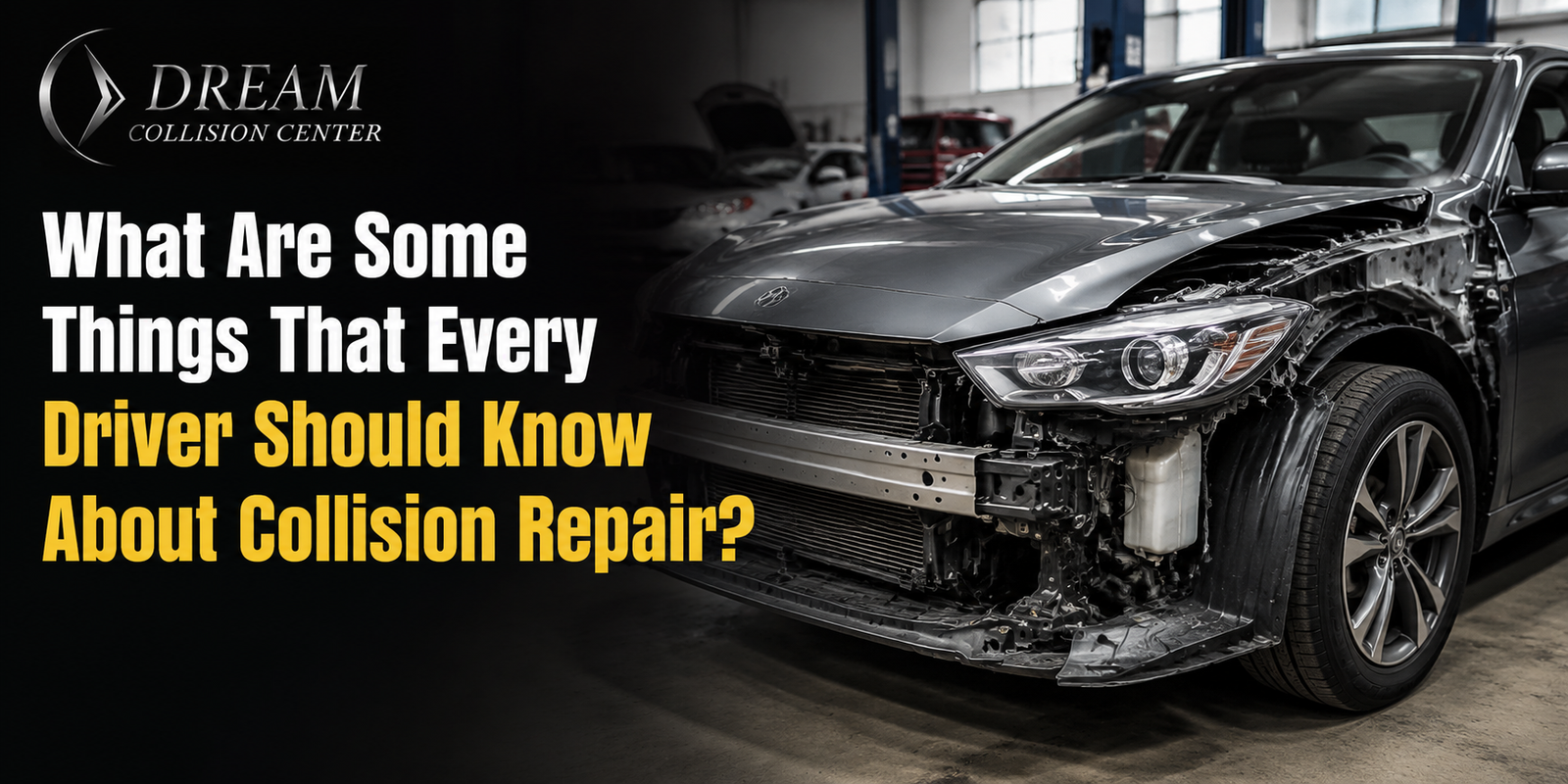
Knowing about collision repair is essential for every driver, whether you’ve experienced a minor fender bender or a major accident. Many people assume collision damage is only cosmetic, but even a low-speed impact can affect your vehicle’s frame, safety systems, and overall performance.
Professional auto collision repair goes beyond fixing dents and repainting panels. It restores your vehicle’s structural integrity, protects advanced safety features, and helps maintain its resale value. Choosing an experienced repair facility like Dream Collision Center in Los Angeles ensures your vehicle is repaired according to industry standards, giving you confidence every time you get behind the wheel.
What Is About Collision Repair?
Understanding about auto collision repair starts with knowing what it actually includes. Collision repair is the process of restoring a vehicle after it has been damaged in an accident. Unlike routine maintenance such as oil changes or tire rotations, collision auto repair focuses on repairing or replacing damaged body panels, structural components, paintwork, and safety systems.
A professional repair may include fixing bumper damage, replacing doors or fenders, correcting frame alignment, and performing aluminium car body repairs for modern vehicles. Skilled technicians also inspect hidden damage that isn’t immediately visible after an accident.
Learning about collision repair helps drivers make informed decisions, choose the right repair shop, and protect their vehicle’s long-term value.
Why Auto Collision Repair Is More Than Cosmetic
Many drivers only notice scratches or dents after an accident, but the real damage may be underneath the surface.
Modern vehicles are engineered with crumple zones, sensors, airbags, and driver-assistance technologies that work together to protect occupants. A collision can affect these systems even when the exterior damage appears minor.
Professional collision repair services restore:
- Vehicle frame alignment
- Airbag and safety sensor functionality
- Steering and suspension performance
- Proper wheel alignment
- Structural strength
Ignoring hidden damage can lead to uneven tire wear, poor handling, or reduced crash protection. That’s why investing in quality collision repair is always safer than delaying repairs.
Things Every Driver Should Know About Collision Repair
One of the biggest misconceptions is that every accident produces visible damage. In reality, internal components often suffer more damage than the exterior.
Another important fact is that a car collision repair estimate may change after technicians begin disassembling the damaged area. Hidden structural problems, damaged brackets, or broken mounting points often become visible only during the repair process.
Drivers should also understand the importance of replacement parts. High-quality components that meet manufacturer standards generally provide better durability and safety than lower-quality alternatives.
Finally, choosing certified collision repair professionals matters. Experienced technicians follow manufacturer repair procedures, use specialized equipment, and perform detailed quality inspections before returning your vehicle.
What Services Do Collision Repair Shops Provide?
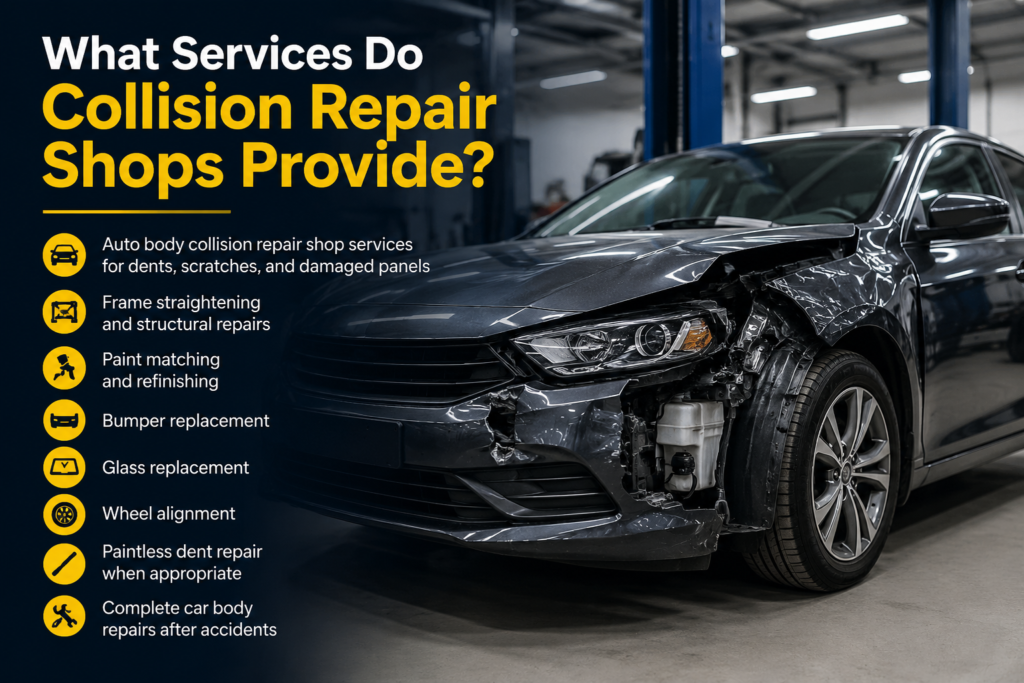
Professional collision repair shops offer much more than dent removal. Their goal is to return your vehicle to its pre-accident condition while ensuring it remains safe and reliable.
Common services include:
- Auto body collision repair shop services for dents, scratches, and damaged panels
- Frame straightening and structural repairs
- Paint matching and refinishing
- Bumper replacement
- Glass replacement
- Wheel alignment
- Paintless dent repair when appropriate
- Complete car body repairs after accidents
Modern repair facilities also use computerized measuring systems and advanced diagnostic tools to ensure every repair meets factory specifications.
Common Problems Drivers Face After an Accident
Accidents often create challenges beyond the visible damage.
Hidden structural issues may affect suspension, steering, or vehicle alignment without obvious warning signs. Insurance claims can also become confusing, especially when additional damage is discovered during repairs.
Many drivers struggle to compare collision repair shops, understand repair estimates, or determine whether a shop has the right certifications.
Unexpected repair costs can also arise due to damaged internal components or delays in obtaining replacement parts. Working with an experienced body shop for car repairs helps reduce these uncertainties through accurate inspections and transparent communication.
How Professional Collision Repair Solves These Problems
A reputable repair center begins with a thorough inspection rather than relying on visible damage alone. Advanced diagnostic equipment identifies hidden structural issues before repairs begin.
The repair process typically includes a detailed estimate, a clear repair timeline, and regular updates throughout the project. Professional technicians follow manufacturer repair procedures and verify every repair through quality-control inspections.
Many repair facilities also assist with insurance documentation, making the claims process smoother and reducing stress for vehicle owners.
This comprehensive approach helps ensure your collision car repair is completed safely and correctly the first time.
Benefits of Choosing Certified Collision Repair
Selecting a provider that specializes in certified collision repair offers long-term advantages beyond appearance.
A professionally repaired vehicle is more likely to retain its structural integrity, maintain its resale value, and perform safely on the road.
Key benefits include the following:
- Better occupant safety
- Accurate structural restoration
- Factory-quality workmanship
- Reduced risk of future repair issues
- Warranty-backed repairs
- Greater peace of mind
Choosing experience over the lowest price often saves money by preventing future problems caused by incomplete repairs.
Why Choose Dream Collision Center?
When drivers in Los Angeles need dependable car collision repair service, Dream Collision Center delivers professional workmanship backed by industry expertise.
The team combines experienced technicians with advanced repair technology to handle everything from minor body repairs and car projects to major structural restoration. Services include car autobody repairs, paint refinishing, frame repairs, insurance claim assistance, and complete collision-repair services.
By prioritizing quality, transparency, and customer satisfaction, Dream Collision Center helps drivers return to the road with confidence.
Conclusion
Understanding about collision repair helps you make smarter decisions after an accident. Professional repairs restore more than your vehicle’s appearance; they protect its safety systems, preserve its value, and improve long-term reliability.
Whether you need minor car body repairs near me or extensive structural restoration, choosing experienced professionals is one of the best investments you can make.
If you’re looking for trusted collision repair services in Los Angeles, Dream Collision Center provides expert assessments, quality repairs, and reliable customer support from start to finish.
Frequently Asked Questions
Q1: What is collision repair?
Ans: Collision repair restores a vehicle after an accident by repairing or replacing damaged structural, mechanical, and cosmetic components.
Q2: Why is professional auto collision repair important?
Ans: Professional repairs ensure your vehicle meets safety standards and performs as intended after an accident.
Q3: How long do collision repairs usually take?
Ans: The timeline depends on the extent of the damage, parts availability, and insurance approval. Minor repairs may take a few days, while major repairs can take several weeks.
Q4: Can collision repair shops find hidden damage?
Ans: Yes. Professional technicians use computerized diagnostics and detailed inspections to identify damage that isn’t visible from the outside.
Q5: What is included in a car collision repair estimate?
Ans: An estimate typically includes labour, replacement parts, paint materials, structural repairs, and any necessary diagnostic procedures.