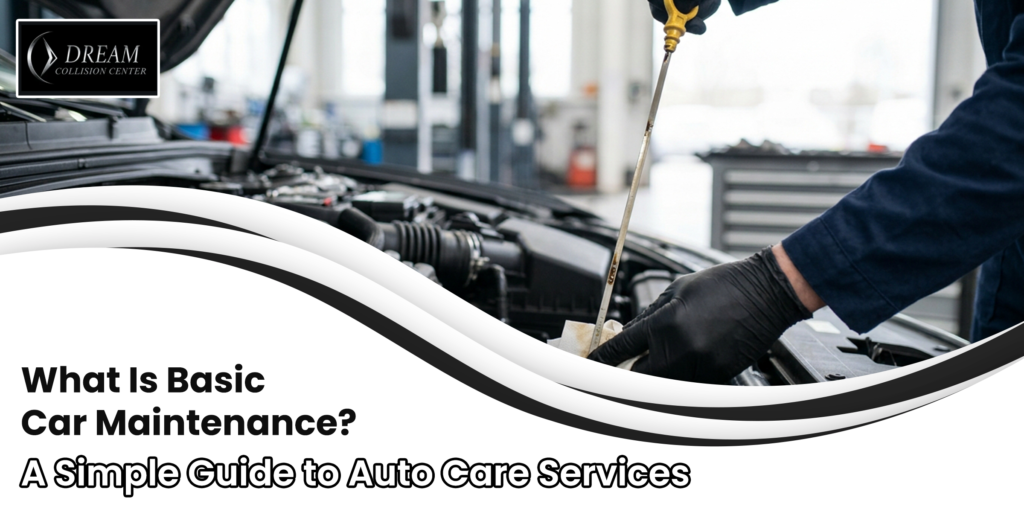
Basic maintenance refers to the regular work your car needs to do the job it was built to do, namely to be safe, dependable, and ready to go. Checking your oil, fluids, tires, brakes, and filters are basic maintenance measures.
Choosing the right auto care services can also clarify how your vehicle is going and spare you a breakdown due to a damaged or worn part. Whether you drive often or rarely, standard servicing will be your main responsibility.
What Is Basic Maintenance for a Car?
Essential maintenance refers to the non-glamorous upkeep and servicing that keeps your vehicle running smoothly. Some of the basic car maintenance you can do at home; others require expert servicing.
Common maintenance tasks include:
- Changing engine oil
- Checking tire pressure
- Inspecting brakes
- Replacing air filters
- Checking fluids
- Testing the battery
- Inspecting belts and hoses
- Checking lights and wipers
The best source for the recommended maintenance schedule for your vehicle is your owner’s manual.
How Much Does Maintenance Cost, and Can I Save on It?
The cost of maintenance will depend on how much your car has traveled, what is required, and what parts are used. Simply, an oil change is cheaper than suspension or brake maintenance.
The costliest thing to do is to fall behind on maintenance. A simple replacement in time can prevent greater damage and, eventually, costs of repairs.
The Importance of Regular Car Maintenance
It isn’t just about the way your vehicle looks. It’s about safety, reliability, performance, and value!
A well-cared-for vehicle will encounter fewer sudden breakdowns. Inspections may also help technicians catch minor problems before they get worse and lead to larger problems.
Basic Car Maintenance Checklist
1. Regular Oil Changes
Motor oil lubricates the moving parts inside your engine. It also protects against friction and heat. As time passes, the quality of the oil degrades.
Use the oil recommended for your vehicle and change it according to your manufacturer’s guidelines.
2. Check and Replace Air Filters
An unclean engine air filter could potentially restrict the airflow to the engine, which in turn might have an impact on engine performance. Be sure to inspect the filter every time it needs service and change it once it becomes dirty or as outlined in the owner’s manual.
Replace the cabin air filter. Remember to change the cabin air filter. This would make the air inside the vehicle much clearer.
3. Tire Maintenance
Tires have a direct effect on a vehicle’s handling, braking and braking distance, ride quality and fuel economy. Check your tyre pressure and check the tread for uneven wear or damage.
Tire Service Near Me: Call us for tire service near me to allow professionals to check the pressure, tread, and alignment of your tires and evaluate the overall condition of your tires.
4. Brake Inspection
Brakes are one of the safety-critical systems on your vehicle. Observe squeal, grind, vibration, or pedal feel.
Brake Inspection: Have a mechanic check your vehicle’s brakes regularly so that you can know if your brake pads are worn, if you need new brake rotors, and if you have other brake problems before they affect your stopping ability.
5. Battery Care
A weak battery can lead to starting problems and leave you stranded. You should also look at battery terminals for corrosion and slow engine cranking.
If your battery is on the aging side, a battery specialist can perform a battery check to see if it has enough power.
6. Fluids Check
Your vehicle uses several fluids to function properly. These could be:
- Engine oil
- Coolant
- Brake fluid
- Transmission fluid
- Power steering fluid
- Windshield washer fluid
Check for low fluid levels or leaks.
7. Timing Belt and Chain Inspection
Timing belts and chains synchronize the internal timing of the engine. It may be time to replace a vehicle’s timing belt after it has traveled a certain number of miles.
Timing chains may wear. If it’s a timing chain, consult your manual or ask an Auto Care Services advisor how often the chain should be checked on your vehicle.
Seasonal Car Maintenance
Extra TLC may be required when the weather is extreme. Before the heat, you should check: cooling system, air conditioning, battery, tires.
In colder weather, be sure to also monitor your battery, your fluids, your tires, your windshield wipers, and your heating system. Regular seasonal inspections will aid in having your vehicle ready for various street and weather conditions.
When to Take Your Car to a Mechanic
Not every issue that you have can be fixed at home. Take your vehicle to a mechanic if:
- Dashboard warning lights
- Unusual engine noises
- Fluid leaks
- Poor braking
- Steering problems
- Excessive vibrations
- Starting difficulties
- Smoke or unusual smells
Professional Mechanical Repairs can help diagnose and fix problems that require specialized tools or technical knowledge.
Regular Maintenance Equals Long-Term Savings
It can be tempting to postpone maintenance when your car seems to be running normally. However, waiting until something fails can result in a more expensive repair.
For example, replacing worn brake components early may help prevent additional damage. Keeping tires properly inflated can also help reduce uneven wear.
Regular vehicle maintenance services help you stay ahead of these issues and make vehicle ownership more predictable.
10 Basic Car Maintenance Tips for Beginners
If you’re new to car maintenance, start with these simple habits:
- Check your tire pressure regularly.
- Follow the recommended oil-change schedule.
- Check fluid levels.
- Pay attention to warning lights.
- Inspect your tires for unusual wear.
- Keep your windshield and lights clean.
- Replace worn windshield wipers.
- Check the battery for corrosion.
- Follow your Auto Care Services schedule.
- Don’t ignore unusual sounds or smells.
You don’t need to be a car expert to take better care of your vehicle. Small habits can make a noticeable difference.
What Happens If I Don’t Service My Car?
Skipping maintenance can allow small problems to develop into larger ones. Old oil, worn brakes, underinflated tires, and neglected fluids can all affect vehicle performance and safety.
In some cases, neglect can also reduce the useful life of important components. Keeping up with basic maintenance is generally easier than dealing with an unexpected breakdown.
DIY vs. Professional Maintenance
Some basic tasks can be completed at home if you have the right tools and knowledge. Checking tire pressure, inspecting wipers, and checking fluid levels are relatively simple.
However, services involving brakes, suspension, engine diagnostics, or complex electrical systems are often better handled by trained technicians.
Professional Auto Care Services can provide inspections and repairs while helping you understand what your vehicle needs.
Car Maintenance Myths and Facts
Myth: If my car feels fine, it doesn’t need maintenance.
Fact: Some wear and mechanical problems develop without obvious symptoms.
Myth: Oil only needs to be changed when it looks dirty.
Fact: Oil should be changed according to the manufacturer’s recommended interval and oil specifications.
Myth: Flat tires are the only time you should be aware of your tires.
Fact: Check tire pressure, tread, and wheels, with the shop checking for uneven or patchy tread and imbalance.
Myth: Maintenance is always expensive.
Fact: Preventive maintenance is frequently easier than repairing or replacing something that fell apart due to the use of old or inadequate parts.
Professional Car Care at Dream Collision Center
Choosing an experienced Auto Care Services provider can make routine maintenance easier. Dream Collision Center provides professional automotive services in Los Angeles and can help drivers address maintenance and repair needs with trained technicians and proper diagnostic equipment.
Conclusion
Basic car maintenance doesn’t have to be complicated. Regular oil changes, tire checks, brake inspections, fluid checks, battery care, and filter replacement can help keep your vehicle dependable.
Following your manufacturer’s maintenance schedule and addressing problems early can also help reduce the risk of unexpected repairs.
For more information about available automotive services, visit Dream Collision Center and explore the services available for your vehicle.
Frequently Asked Questions
How often should I maintain my car?
Follow the maintenance schedule provided by your vehicle manufacturer. Service intervals can vary based on mileage, age, driving conditions, and vehicle type.
What is the most important car maintenance?
Oil changes, tire maintenance, brake inspections, fluid checks, and battery care are some of the most important routine maintenance tasks.
How do I know when my car needs service?
Warning lights, unusual noises, fluid leaks, poor braking, steering changes, and starting problems are all reasons to have your vehicle inspected.
Are vehicle maintenance services worth it?
Yes. Auto Care Services can help identify problems early, improve reliability, and reduce the risk of unexpected major repairs.