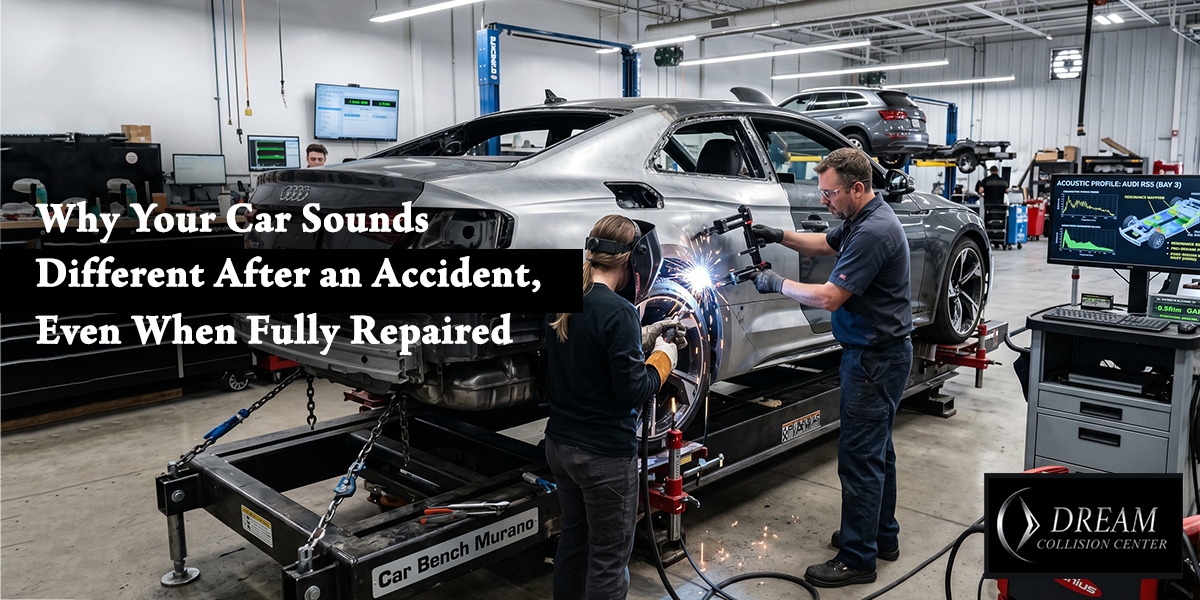
Your vehicle may look fully restored after repairs, fresh paint, aligned panels, and a clean finish, but you might still notice something different: it doesn’t sound the same anymore.
This is common after accident damage repair. Even when work is done professionally at a collision center, small sound changes can happen due to replaced parts or adjusted components. In some cases, these noises are normal, but sometimes they may point to hidden issues that need a closer look.
In this guide, we’ll break down why your car sounds different after a collision, which noises are normal, and when you should return to a collision repair shop for inspection.
Understanding Accident Damage Repair
Modern accident damage repair involves much more than fixing dents and scratches. Today’s vehicles are equipped with advanced safety systems, sensors, structural components, and electronic technologies that must all work together properly after a collision.
Professional repairs often include:
- Auto body repair
- Structural repairs
- Suspension repairs
- Wheel alignment
- Paint refinishing
- Sensor calibration
- Mechanical inspections
The goal of quality car accident repair is not only to restore the vehicle’s appearance but also to return it to its original safety and performance standards. When performed correctly, accident-damage repair helps ensure your vehicle remains reliable, safe, and comfortable to drive.
Why Cars Often Sound Different After Collision Repair
One of the biggest misconceptions drivers have is that a vehicle should feel the same after repairs. While professional repairs restore functionality and safety, some differences in sound are common.
Several factors contribute to these changes.
New Parts Replace Older Components
Many damaged parts are replaced during auto collision repair. New suspension components, brackets, mounts, bumpers, and other parts may behave differently from the worn components they replaced. For example, an old suspension system may have become quieter over time due to wear. After replacement, the new parts may produce slightly different sounds as they settle into normal operation.
Changes in Vehicle Acoustics
Vehicles are carefully engineered to manage sound and vibration. During auto body repair, technicians may remove insulation materials, trim panels, and body components to access damaged areas. Even when these components are reinstalled correctly, small differences can alter how sound travels throughout the cabin.
Increased Driver Awareness
After an accident, most drivers become highly attentive to their vehicle’s performance. Sounds that may have existed before the collision often become more noticeable simply because the driver is paying closer attention. This increased awareness can make normal vehicle sounds seem unusual.
What Different Post-Repair Noises May Mean?
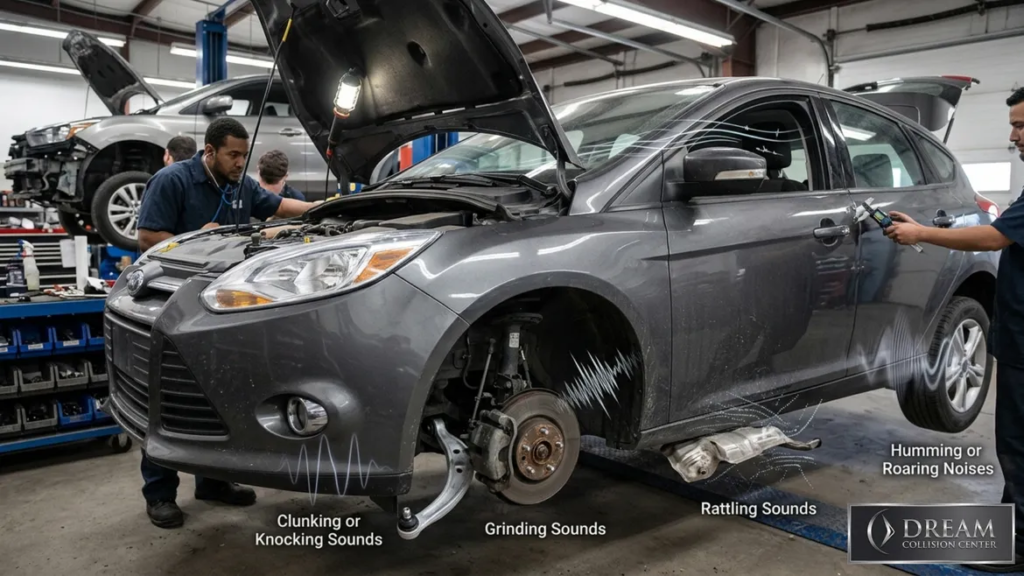
Not every sound indicates a problem, but understanding common noises can help you identify when professional attention is necessary.
Clunking or Knocking Sounds
Clunking sounds often occur when suspension or steering components require adjustment.
Possible causes include the following:
- Loose suspension components
- Worn bushings
- Improperly secured mounting hardware
- Steering system concerns
A collision repair shop should always inspect these sounds if they continue after repairs.
Grinding Sounds
Grinding noises are rarely considered normal. Potential causes include the following:
- Brake system issues
- Wheel bearing damage
- Metal-to-metal contact
- Improper component alignment
Ignoring grinding noises can lead to more expensive repairs later.
Rattling Sounds
Rattling sounds are among the most common complaints following a car repair after an accident. Possible causes include the following:
- Loose trim pieces
- Fasteners requiring adjustment
- Splash shields that need securing
- Interior panels vibrating during driving
Most rattles are easy to correct when identified early.
Humming or Roaring Noises
These sounds often increase with vehicle speed and may indicate:
- Tire wear issues
- Wheel bearing problems
- Alignment concerns
- Suspension-related issues
Whistling or Wind Noise
After collision repair, some drivers notice increased wind noise, particularly at highway speeds. This may result from:
- Door seal adjustments
- Window alignment differences
- Body panel positioning
- Changes in airflow around repaired areas
Normal Sounds After Accident Damage Repair
Certain sounds are generally considered normal after professional repairs.
Slightly Different Road Noise
Wheel alignments and suspension repairs can alter how road sounds are transmitted into the cabin. A small increase or decrease in road noise is often expected.
Suspension Settling Sounds
New shocks, struts, bushings, and other suspension components sometimes require a short settling period. Minor sounds often disappear after several hundred miles of driving.
Changes in Tire Noise
If tires were rotated, replaced, or repositioned during repairs, drivers may notice slight differences in tire noise. This is usually temporary and not a cause for concern.
Hidden Damage That Can Cause New Sounds
Not all collision-related damage is visible during the initial inspection. Hidden issues can sometimes reveal themselves after repairs are completed.
Wheel Bearing Damage
Wheel bearings may sustain damage during an impact, even if no obvious symptoms appear immediately. A damaged wheel bearing often creates a humming, roaring, or grinding sound that becomes louder with speed.
Exhaust System Issues
Even minor accidents can affect the positioning of the exhaust system. During car accident repair, technicians may repair or replace brackets and mounts. Small changes in exhaust alignment can alter sound characteristics.
Frame and Structural Damage
Modern vehicles rely on precise structural alignment. Even slight structural damage can affect the following:
- Vehicle handling
- Tire wear
- Noise levels
- Driving comfort
This is one reason why choosing an accident repair specialist is so important.
Suspension Components
Suspension systems absorb much of the force generated during a collision. Hidden suspension damage may create noises long after visible repairs have been completed.
When New Sounds Should Concern You
Some sounds deserve immediate attention. Schedule an inspection if you notice:
- Noises are becoming louder over time.
- Vibrations increase while driving.
- Steering changes
- Pulling to one side
- Sounds during braking
- Unusual vibrations at highway speeds
These symptoms may indicate mechanical issues that require professional evaluation.
How Professional Technicians Diagnose Post-Repair Noises
Experienced technicians use several methods to identify the source of unusual sounds.
Road Testing
Technicians drive the vehicle under various conditions to reproduce the noise.
Lift Inspections
Vehicles are inspected underneath to check the following:
- Suspension components
- Exhaust systems
- Mounting hardware
- Structural repairs
Alignment Verification
Alignment measurements help identify issues that may contribute to unusual noises and handling concerns.
Advanced Diagnostic Equipment
Modern collision centers use specialized equipment to evaluate vehicle systems and identify hidden problems.
Choosing the Right Collision Repair Shop
Not all repair facilities offer the same level of expertise. When selecting a collision repair shop, consider:
- Industry certifications
- Technician training
- Modern equipment
- Customer reviews
- Warranty-backed repairs
- Experience with your vehicle make and model.
Working with a trusted collision repair shop helps ensure repairs are completed the first time.
Why Do Drivers Choose Dream Collision Center?
At Dream Collision Center, we understand that repairing a vehicle involves more than restoring its appearance. Our team focuses on safety, performance, and customer confidence throughout every stage of the repair process. As a leading provider of collision repair services in Los Angeles, we offer:
- Comprehensive accident damage repair
- Expert auto body repair
- Professional collision repair solutions
- Advanced diagnostics
- Thorough quality inspections
- Manufacturer-recommended repair procedures
Our experienced technicians work hard to ensure every vehicle meets the highest standards before it leaves our facility. Whether you need minor repairs or extensive repairs after an accident, Dream Collision Center is committed to delivering exceptional results. Drivers seeking certified collision repair in Los Angeles can trust our team to provide the expertise, technology, and customer care needed to restore vehicle safety and peace of mind. You can trust us to inspect and repair accident vehicles. Contact us today at (310) 560-3235 for answers to your enquiries and to schedule a consultation. You can also reach us quickly by following us on Facebook.
Conclusion
It is completely normal for a vehicle to sound slightly different after accident damage repair. New parts, repaired systems, alignment adjustments, and restored components can all influence how sound travels through your vehicle. However, persistent, worsening, or unusual noises should never be ignored. Early inspections can identify potential issues before they become costly repairs or safety concerns. If your vehicle sounds different after a collision, trust the experts at Dream Collision Center. Our experienced team can inspect your vehicle, identify the source of the noise, and ensure your repairs continue to perform as intended. Schedule an inspection today and drive with confidence knowing your vehicle has been evaluated by a trusted collision repair shop committed to your safety.
Frequently Asked Questions
Q1: Is it normal for my car to sound different after collision repair?
- Yes. Minor sound changes are common after collision repair due to new parts, alignment adjustments, and restored vehicle systems.
Q2: How long do post-repair noises usually last?
- Some sounds disappear after components settle. Persistent or worsening noises should be inspected.
Q3: Can a quality repair still change vehicle acoustics?
- Absolutely. New materials and replacement parts can alter sound characteristics without indicating a repair problem.
Q4: Should I return to the collision center if I hear rattling?
- Yes. Any persistent rattling should be professionally inspected to ensure all components are properly secured.
Q5: Why should I choose a certified collision repair facility in Los Angeles?
- Certified facilities follow industry standards and manufacturer procedures, helping ensure your vehicle is repaired safely and correctly.